

Don't Fall for Spoofed Calls: What You Need to Know
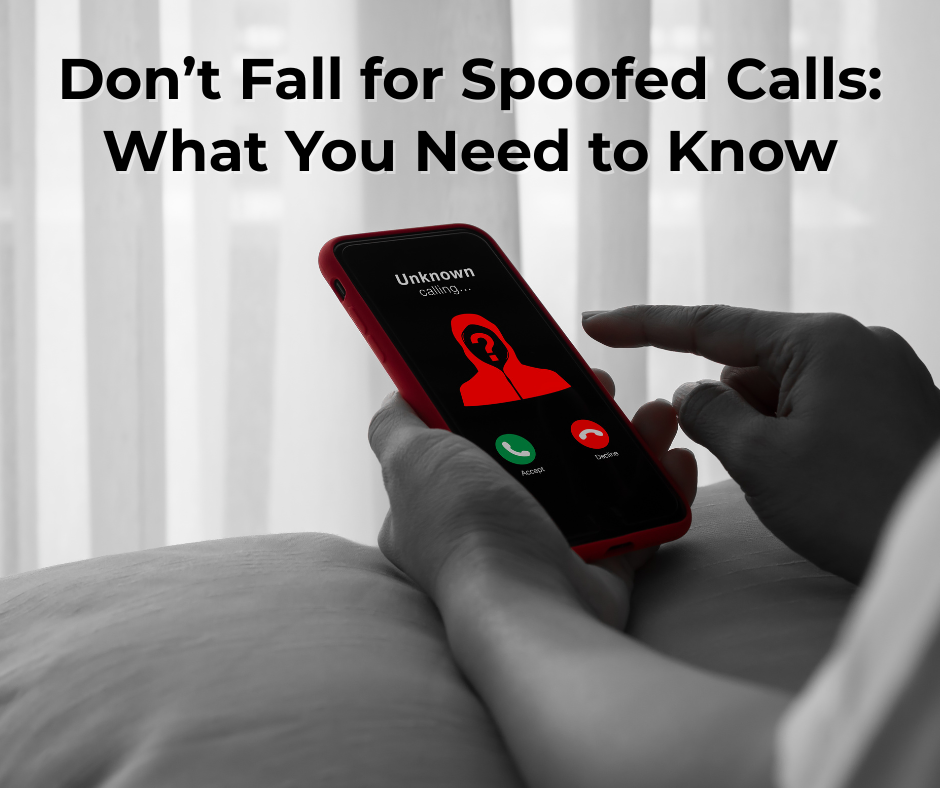
Imagine this: It’s Thanksgiving afternoon, and Sarah is relaxing after dinner when her phone rings. The caller ID shows her credit union’s name and local phone number. Thinking it might be important, she answers. The caller claims to be from her credit union’s fraud department and requests Sarah to verify a large charge and demands all the details on her credit card through her credit union, along with other banking information.
Something feels off. Why would her credit union call on a holiday? And why are they asking for sensitive information over the phone? Sarah trusts her instincts, hangs up, and calls her credit union using the number on her card. Good thing she did. The call was a scam.
What is Spoofing?
According to the Federal Trade Commission (FTC):
Spoofing is when a caller deliberately falsifies the information transmitted to your caller ID display to disguise their identity. Scammers often use “neighbor spoofing” so it appears that an incoming call is coming from a local number, or they spoof a number from a company or government agency you know and trust. If you answer, they use scam scripts to try to steal your money or valuable personal information, which can later be used in fraudulent activity.
Warning Signs for a Phone Scam
Be alert for these red flags:
- Unsolicited calls: You weren't expecting the call.
- Suspicious timing: Calls on holidays or outside normal business hours.
- Financial urgency: Pressure to provide account details, passwords, card information, or verification codes.
How to Protect Yourself
- Don't answer unknown calls even if the caller ID looks familiar. Spoofing makes numbers appear legitimate.
- Never share personal or financial information over the phone.
- Don't give out verification codes sent to your phone.
- If you're concerned, hang up and call your credit union using the number on your card or their official website. Never trust numbers from suspicious emails or texts.
If You Think You've Fell for a Scam
Stay calm, but act quickly:
- Hang up with the scammer immediately. Do not stay on the phone any longer to try to negotiate with the scammer.
- Call your financial institution immediately using the trusted number from your card or their official site.
- Update your passwords for online banking and related accounts if necessary.
- Verify your personal information and monitor your accounts for suspicious activity.
Our Promise to You
IAA Credit Union will never contact you by phone, text, or email to ask for personal information, passwords, or verification codes. If you receive such a request, it’s a scam! Hang up and report it.
